ANOMALITH Review
Published ANOMALITH reviews point to enjoyable shooting, extensive equipment customization and distinctive anomalous environments, alongside disagreement about survival tension, repetition and technical polish. This ANOMALITH review compares those attributed accounts with the official game systems instead of presenting other reviewers’ playthroughs as our own. It does not assign a new score or claim an independent cross-platform performance test that the available evidence does not contain.
What kind of game is being reviewed?
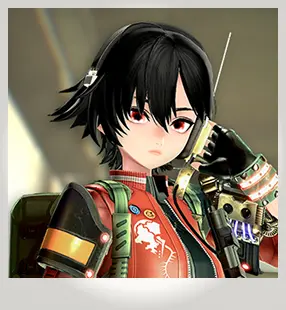
The official description presents a survival third-person shooter set in Japan, with liminal spaces and retro visual influences. Reona Minazuki enters Anomaly Zones while searching for a missing friend, encountering distorted environments and dangerous creatures. The confirmed structure combines investigations, gunfights, recovered resources and preparation at Base rather than offering only passive environmental exploration.
That identity helps explain some of the disagreement in reviews. A player focused on gunplay and equipment combinations may emphasize different parts of the experience from someone looking for sustained resource scarcity or uninterrupted horror tension. Those are different expectations applied to the same collection of systems, not evidence that a review score alone can explain how the game will feel to everyone.
Shooting is a recurring positive
Game8’s review strongly emphasizes the appeal of the shooting while criticizing parts of the surrounding design. Shacknews also describes enjoying the action, loot handling and encounters with unusual enemies. These are separate reviewer experiences, and their agreement makes gunplay a recurring theme rather than an opinion invented for this page.
The praise does not establish that every gun is equally satisfying or that one particular weapon has the highest damage. Official material confirms firearm selection and customization, but a full controlled weapon comparison is absent from the collected sources. The useful conclusion is that multiple reviewers found the shooting engaging, while exact balance claims still require different evidence.
Customization has breadth, with usability complaints
The producer’s content letter describes at least seventy gun attachments and at least three hundred outfit and equipment parts. The official overview also separates firearm attachments, Artifacts and clothing across nine equipment parts. These are concrete descriptions of customization breadth rather than a claim that the game contains three hundred complete outfits or equally many distinct builds of proven quality.
Final Weapon’s release review highlights a less positive side of that system, reporting uncertainty over crafted attachments fitting the intended gun. That account concerns description and compatibility usability rather than disproving the presence of customization. A large content count and a complaint about navigating that content can both be true, so the review comparison keeps them separate.
Why opinions differ on survival pressure
Official descriptions connect ammunition, inventory decisions and returning recovered resources with the preparation loop. Noisy Pixel feels that convenient material returns and progression reduce some of the friction expected from survival systems. Game8, meanwhile, argues that the survival aspect becomes more apparent at higher difficulties, giving context to why the same loop may be evaluated differently.
Neither opinion provides a measured resource-scarcity curve for every mode. A review’s impression can be shaped by the chosen difficulty, progress and equipment decisions, which the current material does not normalize into a single test. This page therefore describes the disagreement without declaring that the game is universally easy, permanently ammunition-starved or guaranteed to feel like another survival series.
Anomalous environments and narrative identity
The official examples include an apartment complex with reversed gravity, twisting corridors and an endlessly multiplying shopping area. These settings explain why reviews compare the visual identity with liminal-space horror and reality-bending environments. They provide a recognizable theme beyond the weapon system without establishing a complete location list or a guaranteed reaction from every player.
TheSixthAxis responds positively to the game’s world and personality despite its flaws. Noisy Pixel is more critical about how the narrative and supporting systems come together. Those judgments concern execution and personal engagement, so they are presented as attributed differences rather than rewritten as an objective verdict about every scene.
Inventory and technical issues need their own context
Final Weapon discusses inventory usability and reports a backpack-related problem during its playthrough. Other collected player discussions include input complaints, Demo performance observations and individual Switch 2 crash reports. These are useful accounts of concerns raised by players, but their platform and version differences prevent treating them as one universal defect affecting every installation.
The mouse guide and Switch 2 page preserve those contexts more specifically. An older Demo report does not establish that the same issue remains in the release, while a single full-game report does not establish a platform-wide failure rate. This comparison does not add an unsupported patch fix or technical guarantee to either side of the review discussion.
How the reported playtimes compare
Noisy Pixel reports a personal clear time of roughly sixteen to twenty hours, while Final Weapon describes around ten to fifteen hours for main missions alone. Game8 discusses approximately twenty to twenty-five hours of playtime and additional time for deeper side-content or equipment experimentation. These are different accounts with different scopes rather than interchangeable entries in a verified player-average dataset.
The producer’s at-least-thirty-hour estimate includes the main story, side missions and Dive Reports. That makes it a full-content statement, not a contradiction of every shorter main-story review. The how long to beat guide separates these measurements and explains why the collected HowLongToBeat page cannot currently supply a reliable average.
What the editions add to the comparison
The official Digital Deluxe package includes digital art and soundtrack extras plus a named weapon-and-outfit set. Those contents are separate from the base game’s confirmed systems and from the early-purchase collaboration rewards described on Steam. The existence of a paid bonus gun is not evidence that the normal arsenal is incomplete without it or that the purchase guarantees a superior build.
The DLC guide lists the documented inclusions and Steam claim conditions without recommending an edition based solely on its name. For understanding the opening gameplay, the Demo guide identifies official trial sources and the confirmed PS5 save-transfer restriction. Those details are more concrete than a fixed price-to-hours calculation built from inconsistent review time estimates.
The supported reading of these reviews
The recurring strengths are shooting, customization and the unusual setting, while the recurring reservations concern cohesion, resource pressure, repetition and aspects of usability. Their relative importance varies between reviewers and should remain visible when comparing opinions. This page was reviewed on October 30, 2026, and remains a sourced comparison rather than an independently scored playthrough.