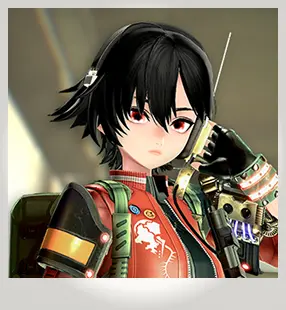
ANOMALITH Beginner Guide
ANOMALITH’s core loop is to prepare at Base, enter an Anomaly Zone, recover useful materials and return to develop your equipment. Firearms, ammunition, Anomalization Skills and the space in your inventory all belong to that loop, so learning them together is more useful than treating this as an unlimited-ammunition shooter. This ANOMALITH guide explains the systems confirmed by official information and identifies the practical actions demonstrated in player footage.
Understand what a Dive involves
The official systems overview describes investigations inside spaces distorted by anomalous phenomena. Its examples include an apartment complex with inverted gravity, a twisting corridor and a shopping street that multiplies beyond its normal boundaries. Combat and exploration happen inside these environments, while the items recovered during Dives can be brought back to Base and used there.
That connection between exploration and development explains why materials matter even when they are not immediately useful in a fight. Recovering something and equipping it are different parts of preparation, and a successful investigation feeds the next round of equipment decisions. The official description establishes this relationship without giving a universal shopping list or an optimal first upgrade, so no particular craft is presented here as mandatory.
Prepare a firearm and understand its ammunition
Firearms are a central combat tool, and the official advice is to select the right weapon for the situation. Ammunition and equipment are explicitly part of preparing for Dives rather than separate background systems. A useful starting point is therefore to understand the gun you are carrying and its ammunition requirements before comparing late-game weapons or looking for a supposed best build.
The available footage also distinguishes ordinary weapon development from paid bonus weapons. A Demo crafting recording discusses several firearm types, while the official DLC description separately lists a Semi-Automatic Sniper Rifle, Double-Barreled Shotgun and Prototype Handgun. Those three named bonus items are not evidence that every weapon of the same general type requires DLC, and the collection does not establish a complete weapon unlock order.
Use the confirmed combat systems as separate tools
Reona Minazuki has twelve Anomalization Skills according to the official overview. These powers support gunfights and can change the course of an encounter, giving the character options beyond simply carrying a different firearm. The source confirms the number and purpose of the powers but does not provide the complete numerical comparison needed for a reliable skill tier list.
Weapons, skills and equipment should also remain distinct when reading advice from other players. A firearm attachment changes a gun, an Artifact improves attributes, and clothing belongs to another equipment system with its own effect on the character. Combining all of these under the word upgrade can make a video sound more specific than it actually is, particularly when the demonstration was recorded in a Demo.
Learn sorting before assuming you need more capacity
In Leo K’s Hard Mode Demo commentary, the narrator describes quick-sorting inventory with Y or Triangle. That is a demonstrated prompt from the recording’s control setup, not a verified keyboard shortcut for every platform. It is useful evidence that a quick-sort action exists in that Demo, while the correct prompt for another input device remains the one shown in that version of the game.
Inventory organization and moving materials out of the carried inventory are related but different actions. Noisy Pixel’s release review describes taking materials to a portal and sending them back, then using recovered resources for upgrades. This supports the material-return loop, but it does not establish unlimited character fast travel, the capacity of every backpack or a guaranteed solution to a cursor problem.
Separate firearm parts, Artifacts and clothing
The official site confirms that attachments customize firearms and that Artifacts recovered from Anomaly Zones improve attributes. It also describes clothing as equipment divided into nine parts, with the chosen pieces affecting Reona’s statistics. These are three related forms of preparation, but they are not interchangeable item categories or proof that a part can fit any weapon.
Final Weapon’s review provides a practical example of why the distinction matters: its reviewer reported difficulty understanding whether crafted attachments would fit a particular gun. That report is a reason to read an individual part’s description rather than infer compatibility from a broad label such as SMG. It is not a verified list of broken attachments, and the collected information does not contain a complete compatibility chart.
Choose using the available mode description
Release-version streams demonstrate a Survival difficulty, and a recent reviewer also describes a choice of difficulties. Those observations establish that difficulty is a real consideration, but they do not supply an official table of enemy health, damage or resource changes. The current evidence therefore supports reading the mode description rather than choosing from invented multipliers or a claim that every setting is interchangeable during a save.
Individual reviews differ about how much pressure the survival systems create. Some emphasize enjoyable shooting and rewarding upgrades, while others feel that upgrades or convenient material returns reduce the tension they expected. Those are experiences shaped by play style and version, not a guarantee that one difficulty will feel easy or hard to every new player.
Handle bonus rewards separately from normal progress
The Steam description gives specific conditions for the collaboration side mission and its rewards. The mission is accepted from the Workshop board after side missions become available through progress, and its clothing and skin rewards are claimed from that board after completing the mission. A development-material bonus has a different condition, being granted after the Shooting Range is unlocked.
These conditions are more useful than the assumption that every edition bonus appears immediately in the inventory. They also concern the relevant Steam bonus description, whose stated availability period runs from October 29 to November 11, 2026, in Japan Standard Time. Console editions, later availability and other packs should be read separately rather than assigned the same claim rules without evidence.
Use the guide that matches your immediate problem
For a specific obstacle, continue to the inventory guide, attachments guide or shotgun guide. Each separates an observed action from details that the available sources have not verified, such as a complete hospital route or a weapon’s exact development recipe. This keeps a short, useful answer from becoming an unsupported promise about the entire game.
If you are deciding how much to play before buying, the Demo guide explains the confirmed trial information and the PS5 save-transfer restriction. The producer estimates that the Demo represents approximately ten percent of the complete game’s content, which leaves many later weapons, equipment pieces and areas outside a first session. That is a content estimate rather than a rule for multiplying a Demo clear time into a full-game completion time.
Sources and version notes
This page combines the official systems and Steam descriptions with already collected commentary rather than claiming an independent full playthrough. The specific sorting demonstration comes from older Demo footage, while the material-return and compatibility observations come from release reviews. Information was reviewed on October 30, 2026, and details without direct support are left unconfirmed.